The belt is only the visible part
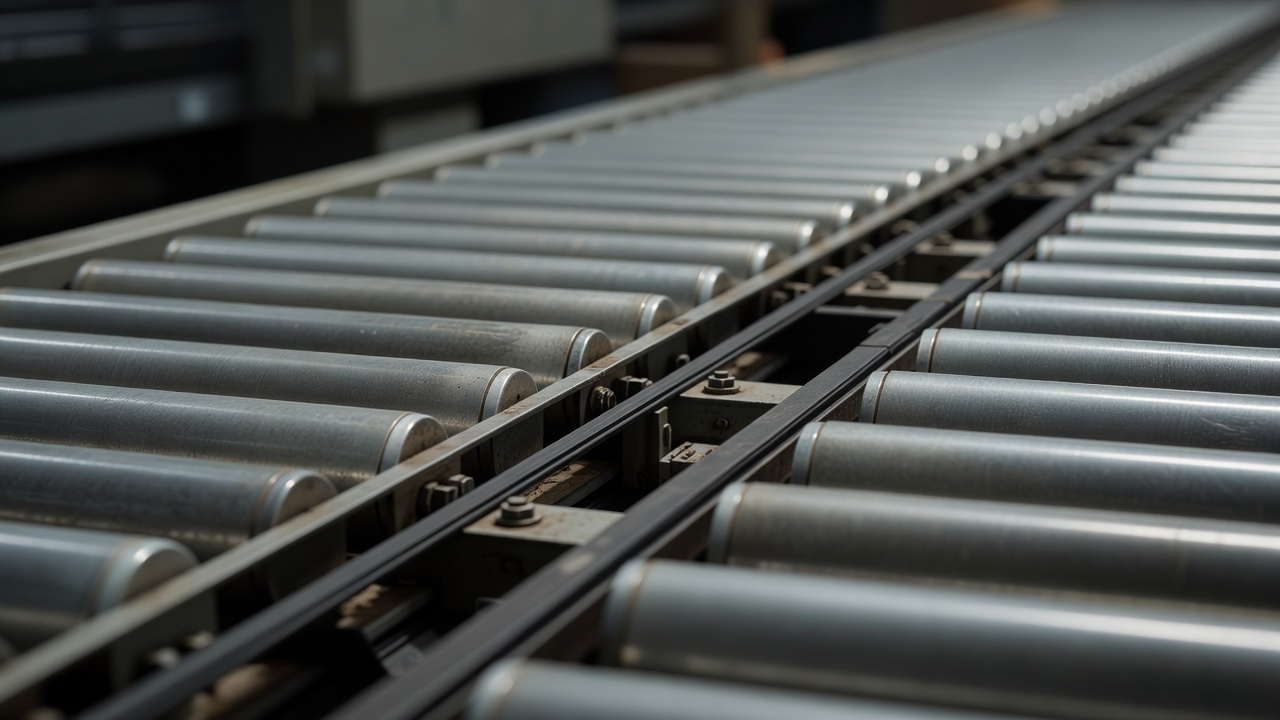
Look at a baggage belt and the obvious action is continuous movement. Underneath that simple impression are drives, sensors, controls, supports and safety functions. The transport system needs to know whether a zone is occupied, whether the receiving section is available and whether a bag has arrived when expected. Movement without those checks can turn a small disturbance into a larger obstruction.
Bags are awkward loads. A hard case may travel predictably on its broad face, while a soft bag can sag into a gap or change shape as its contents settle. Wheels, handles and straps introduce extra contact points. Transport design therefore considers more than the average suitcase: it needs defined limits and a separate route for items outside them.
Spacing creates room to make decisions
A gap between two bags is operational space. It lets a reader distinguish items, gives a diverter time to reset and helps sensors maintain a reliable association between a load and its record. If bags arrive touching or overlapping, a singulation process may be needed to create a manageable stream before later identification and sorting stages.
Conveyor zones can hold or release loads to prevent downstream crowding. This is not wasted motion. A short, deliberate pause upstream may protect a critical transfer point from becoming blocked. Controls must balance useful accumulation against the risk of filling the network so completely that there is no room to recover.
Belts and individual carriers solve different problems
In a conventional belt network, the bag rests directly on the conveying surface. An individual carrier system places it in a tray or another dedicated carrier for part of its journey. A carrier can provide a more controlled transport interface and a clear carrier-to-bag association, but it also introduces loading, unloading and empty-carrier management tasks.
Neither architecture is inherently the correct answer for every airport. Building geometry, travel distance, peak demand, maintenance access and connections to existing facilities all influence the choice. The useful comparison is the whole operating system, including what happens when a bag does not load cleanly or a carrier is unavailable.
- Merge
- A controlled junction where two streams enter a shared path. Release timing must preserve suitable spacing.
- Buffer
- A place where bags can wait temporarily, helping separate arrival timing from downstream processing demand.
- Early-bag storage
- A managed holding function for bags accepted before their flight’s active make-up period. Retrieval is part of the process, not an afterthought.
Capacity belongs to the narrowest handoff
A fast belt does not automatically create a fast baggage system. A screening interface, sorter discharge, storage retrieval point or manual collection station can constrain the overall flow. Sending more bags toward a constrained interface may simply increase the queue. Capacity planning needs the pattern of demand as well as the number of bags.
Flight schedules create waves. A system that copes with an average hour may struggle during a concentrated departure bank or after a disruption releases many delayed bags together. Useful assessments examine peak arrival patterns, buffer occupancy and how quickly the network returns to a manageable state after an interruption.
Flow is not the speed of the belt. It is the ability of the next handoff to accept the load.
| Function | Potential advantage | Question to investigate |
|---|---|---|
| Direct belt transport | Flexible connections between processing zones | How are spacing and bag association maintained? |
| Individual carrier | Controlled load interface over part of the route | How are carriers inducted, emptied and returned? |
| Storage buffer | Separates acceptance time from dispatch time | Can retrieval meet the required flight sequence? |
Design for recovery, not just motion
A jam response needs more than a warning light. Operators must identify the affected location, understand which upstream flows should stop and arrange safe intervention. Restarting equipment before the load path is clear can repeat the fault or create a hazard. This article is explanatory, not a maintenance or troubleshooting instruction.
Equipment reliability also depends on planned care: belt condition, alignment, sensor cleanliness and mechanical wear all affect the consistency of transfers. Good reporting separates equipment faults from unsuitable loads, process changes and external delays. That separation makes improvement possible without blaming every missed connection on “the conveyor.”